
THE TERRITORY OF BIANZONE
From its origins to today: discovering a fascinating village
Location
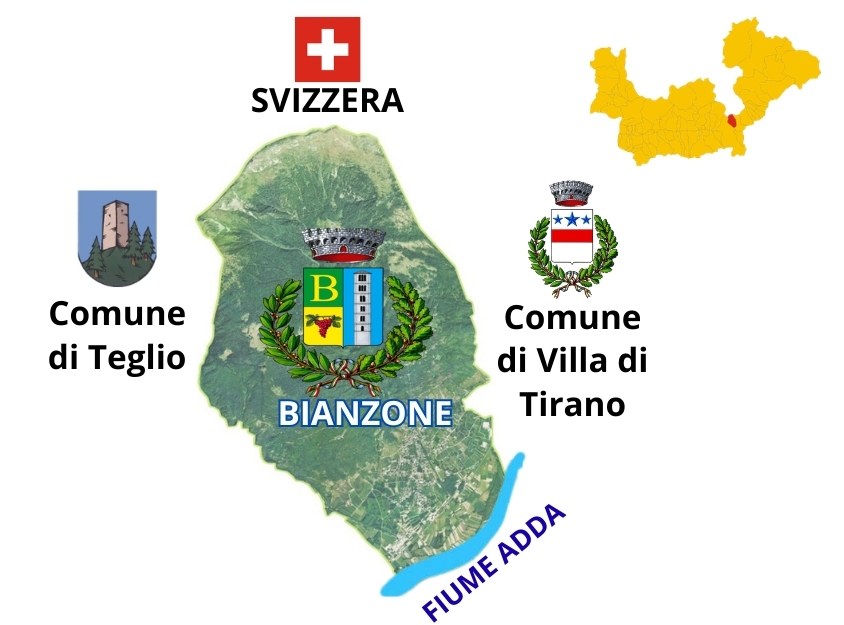
Bianzone is a small mountain municipality of almost 1,300 inhabitants in Valtellina on the Rhaetian side. It is bordered to the north by Switzerland, to the east by the municipality of Villa di Tirano, to the west by the municipality of Teglio and to the south by the river Adda and the Orobian Alps.
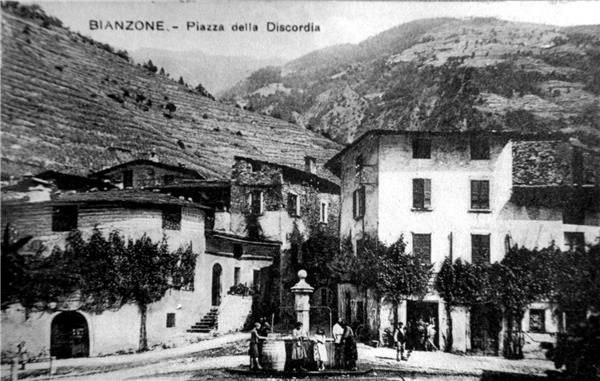
Originally, the settlement was located on the border with Villa di Tirano, in the vicinity of the Church of San Martino, then before 1000 the village was destroyed by the Valle torrent. This formed a dejection cone, i.e. a fan-shaped accumulation of debris, above which the village now stands. The climate is Alpine, characterised by cold winters, in the past even very cold, and cool summers, although in recent years rising temperatures have led to noticeable climatic changes.
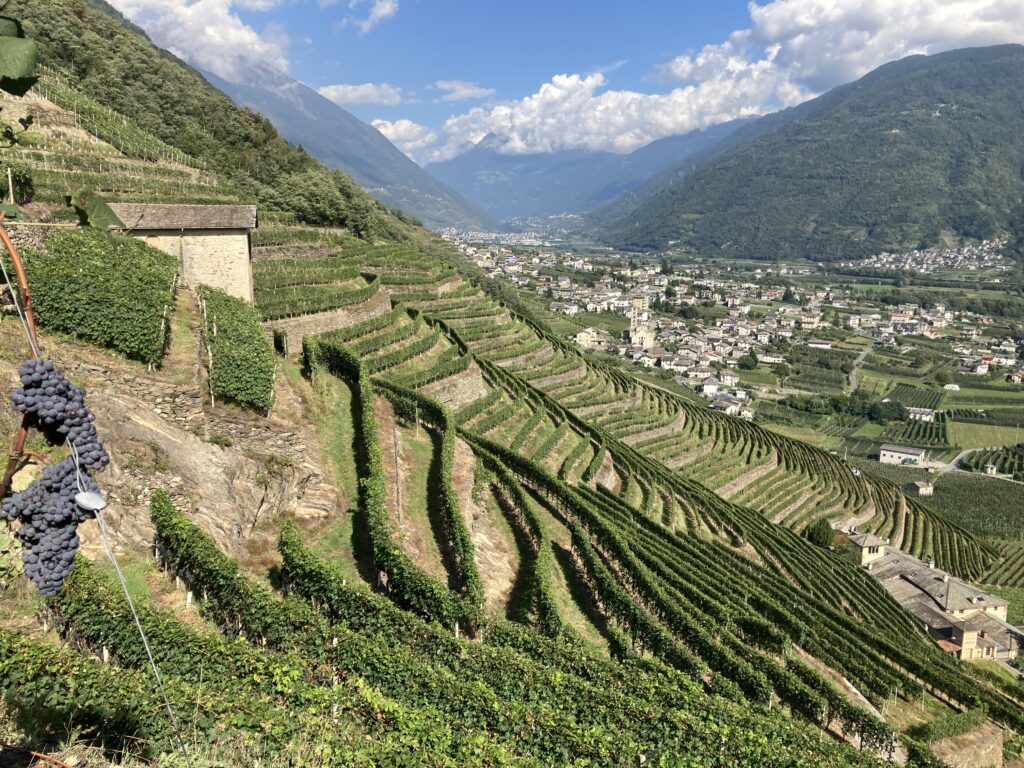
The valley floor is characterised by meadows and fields. Rising up the conoid are the meleti and terraces with vineyards, which allow the vines to grow more luxuriantly. At the level of the hamlets of Bratta and Piazzeda, until the 1960s there were huge fields of buckwheat and rye, while now the forest has taken over.
For more information: GEOGRAPHICAL FRAMEWORK by Dr. Mario Curcio
Hydrography and orography
Bianzone is located on the right bank of the Adda and is crossed from north to south by the Valle stream, which is approximately 8 km long. The torrent originates from three springs near Campione, called Corna, Fontanaccio and Acqueta, and in the past has been the cause of many floods and disasters: the worst around the year 1000, when it submerged the ancient town centre, and in 1870, when it invaded the Sanctuary of the Madonna del Piano with its debris and waters.
The Valley's water is turbined in the Hydroelectric Power Station located in Località Colora, but it is not only used to produce electricity: it also provides the water needed for drinking, cooking, washing and watering the fields and meadows. Two other important watercourses are the Adda River to the south and the Boalzo Valley Stream to the west, which act as natural boundaries.
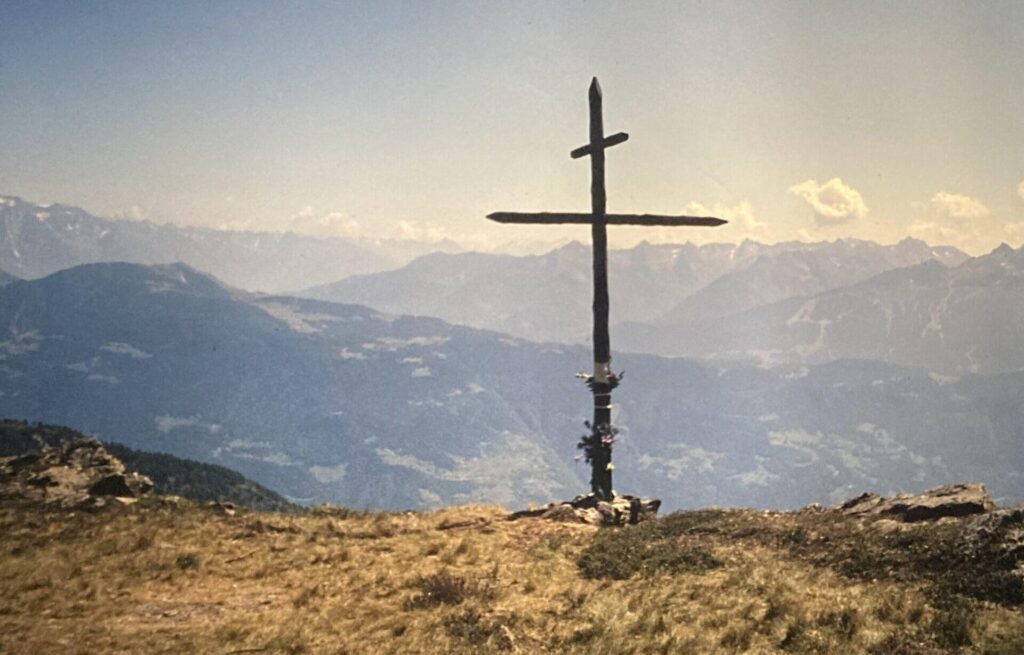
The municipality of Bianzone is located on the Rhaetian slope of the Alps, ranging roughly from 300 m on the plain to 2200 m at Colle d'Anzana. Bianzone has a fairly flat valley floor, even though it is at a hilly altitude. From the town centre upwards, the environment is typically mountainous. The municipality's highest peak is the monte Cancano at 2436 m. Other peaks include Dosso della croce, Combolino, Vetta Salarsa, Pala, Crostone, Corno and Elica. The pass that connects Bianzone with Switzerland is the Colle d'Anzana.
For more information: TERRITORY AND ENVIRONMENT by Vanda Cerveri
History

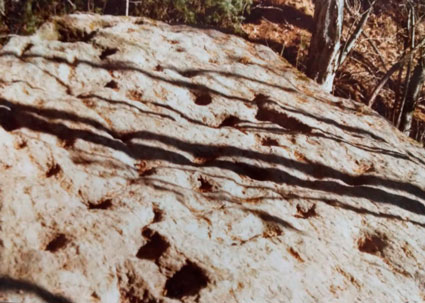
Bianzone is frequented by groups of primitive men who hunt and make sacrifices. Rocks with rock engravings have been found in the woods.
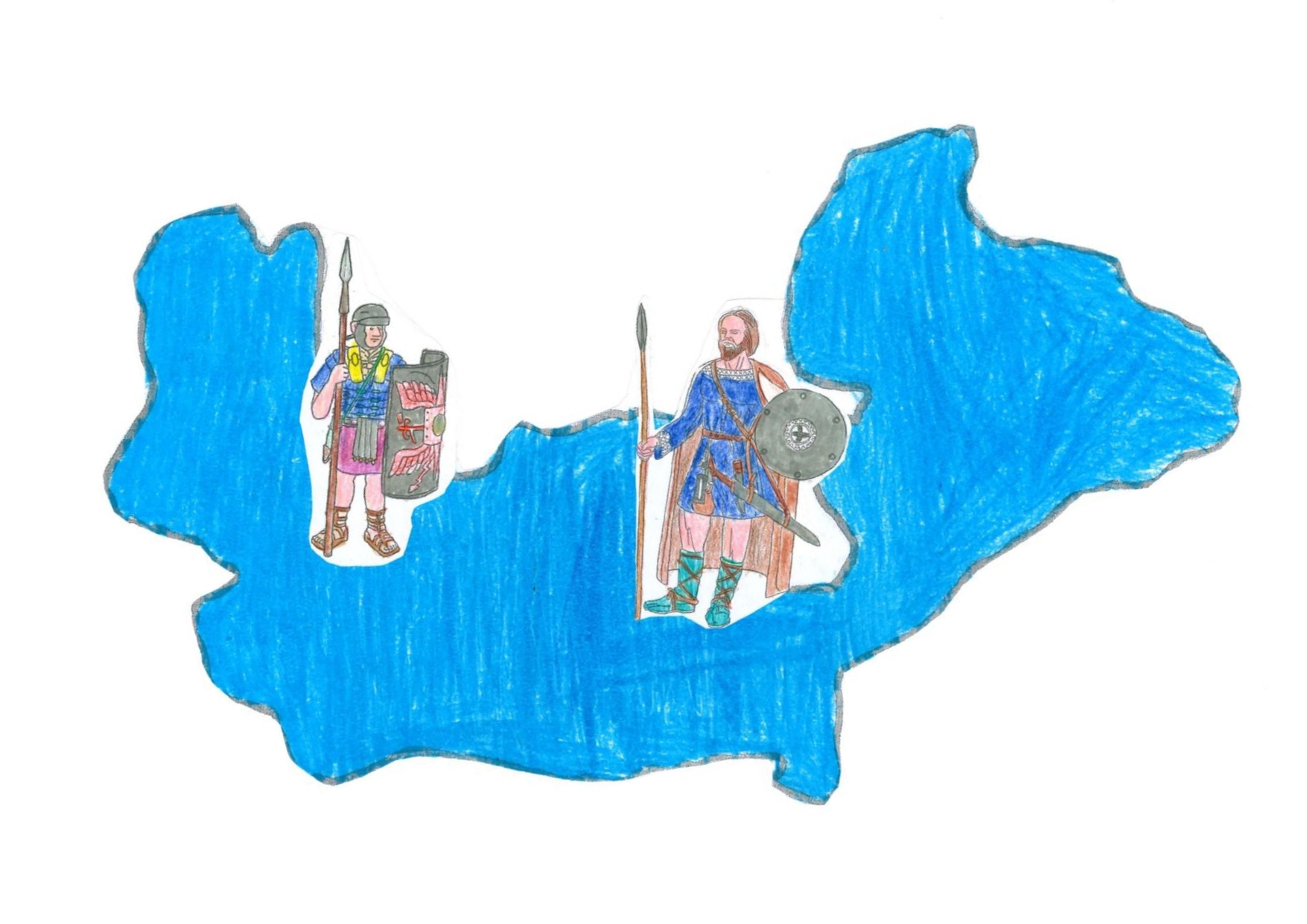
The Roman emperor Augustus conquered Valtellina, which remained Roman territory until 476 when the area was conquered by a Germanic people: the Lombards.
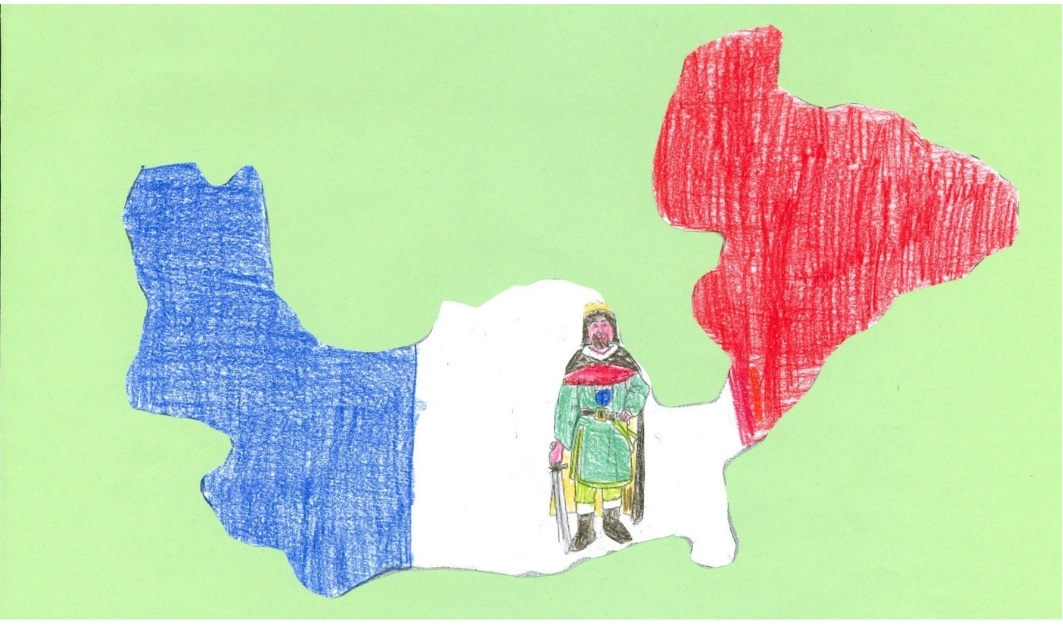
Charlemagne conquered Valtellina, which became a Franks' area.
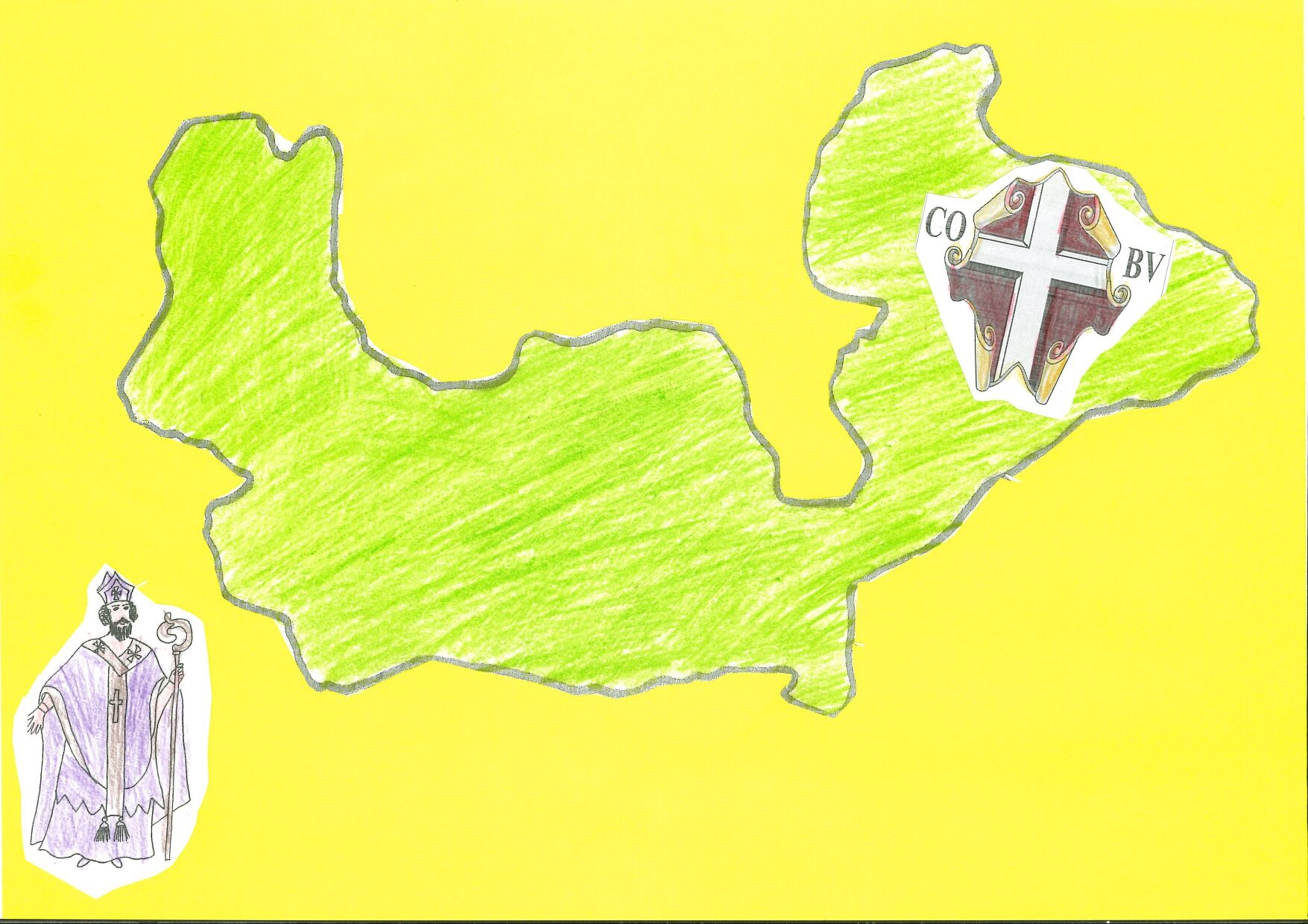
Bianzone became the property of the bishop of Como and, since then, a popular destination for the nobles of Bormio to spend the winter.
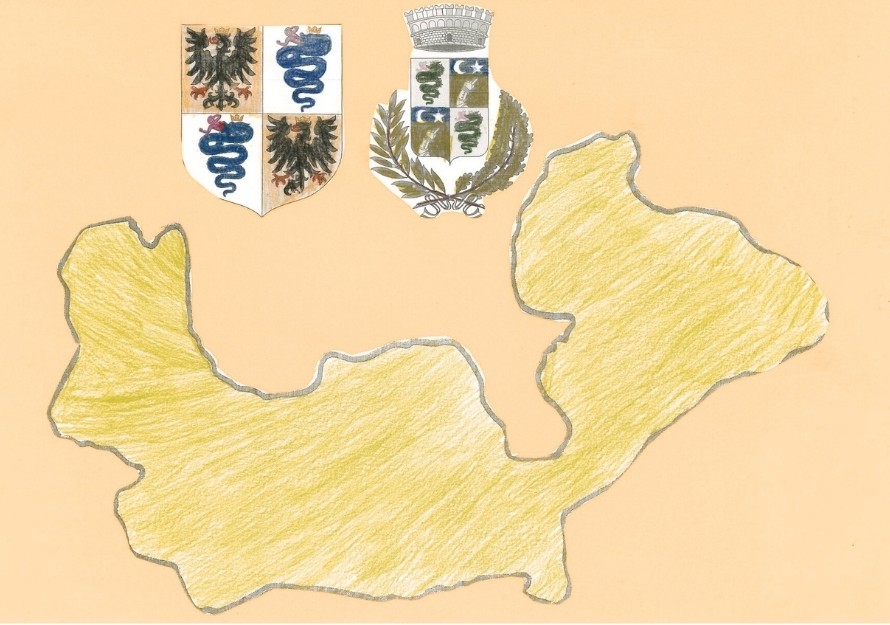
Como, Valtellina and Valchiavenna became the property of first the Lords Visconti and then Sforza of Milan.
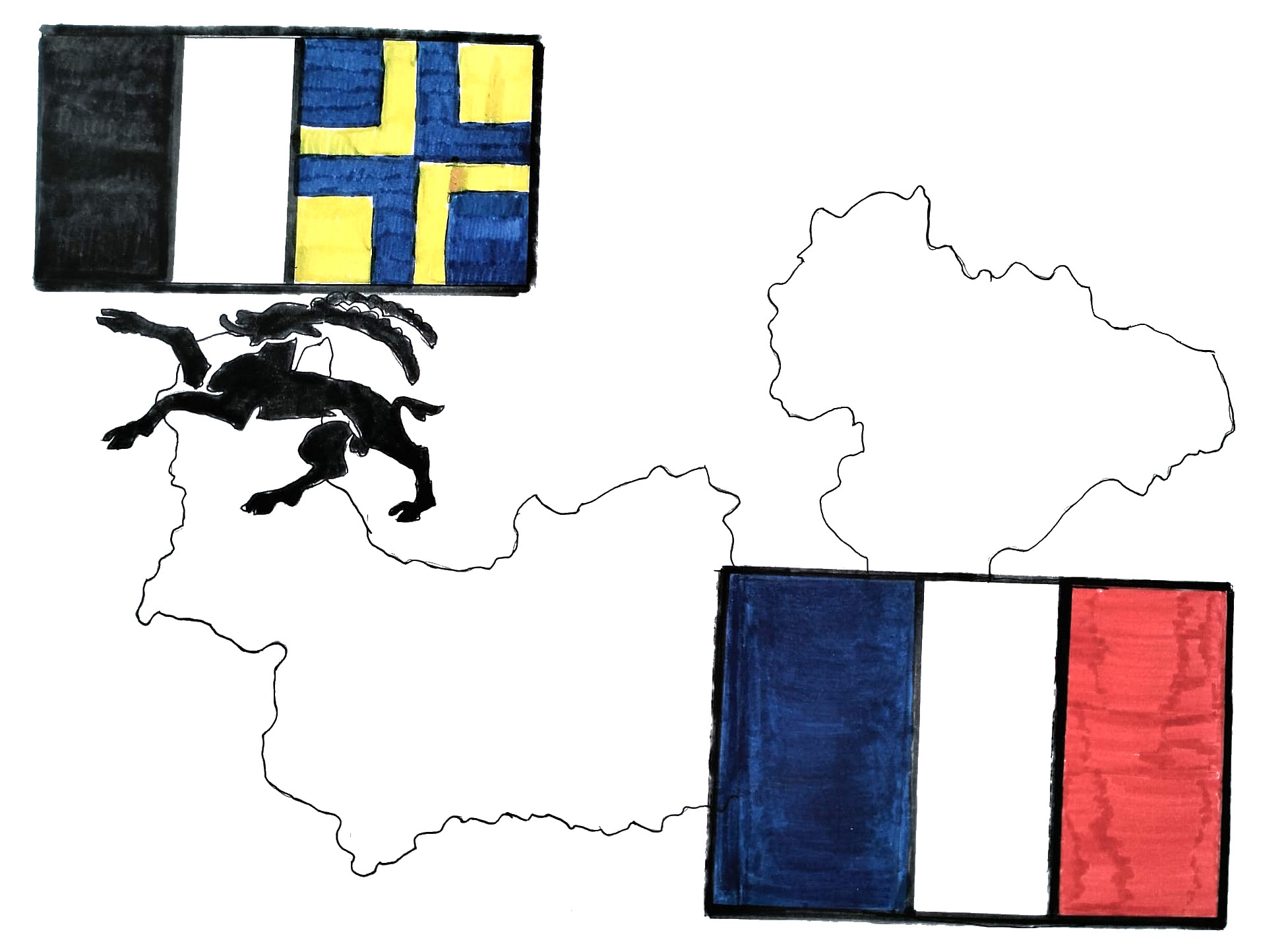
The Valtellina territory was conquered by the French, arrogant and violent masters. Their rule was short-lived, however, because in 1512 the Grisons arrived.
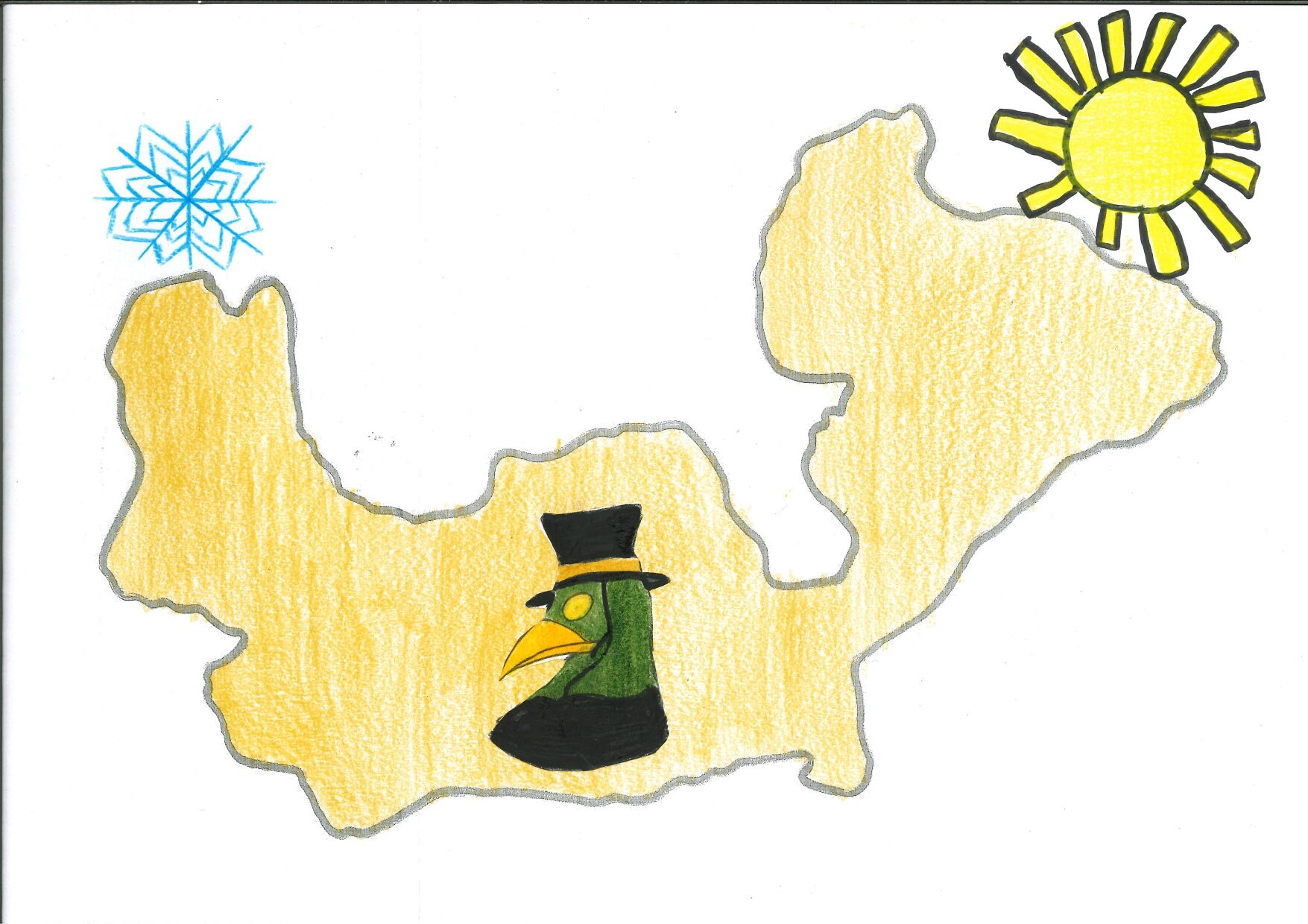
The entire 16th century is characterised by epidemics and climate crisis, which leads to the population dying of plague and impoverishment.
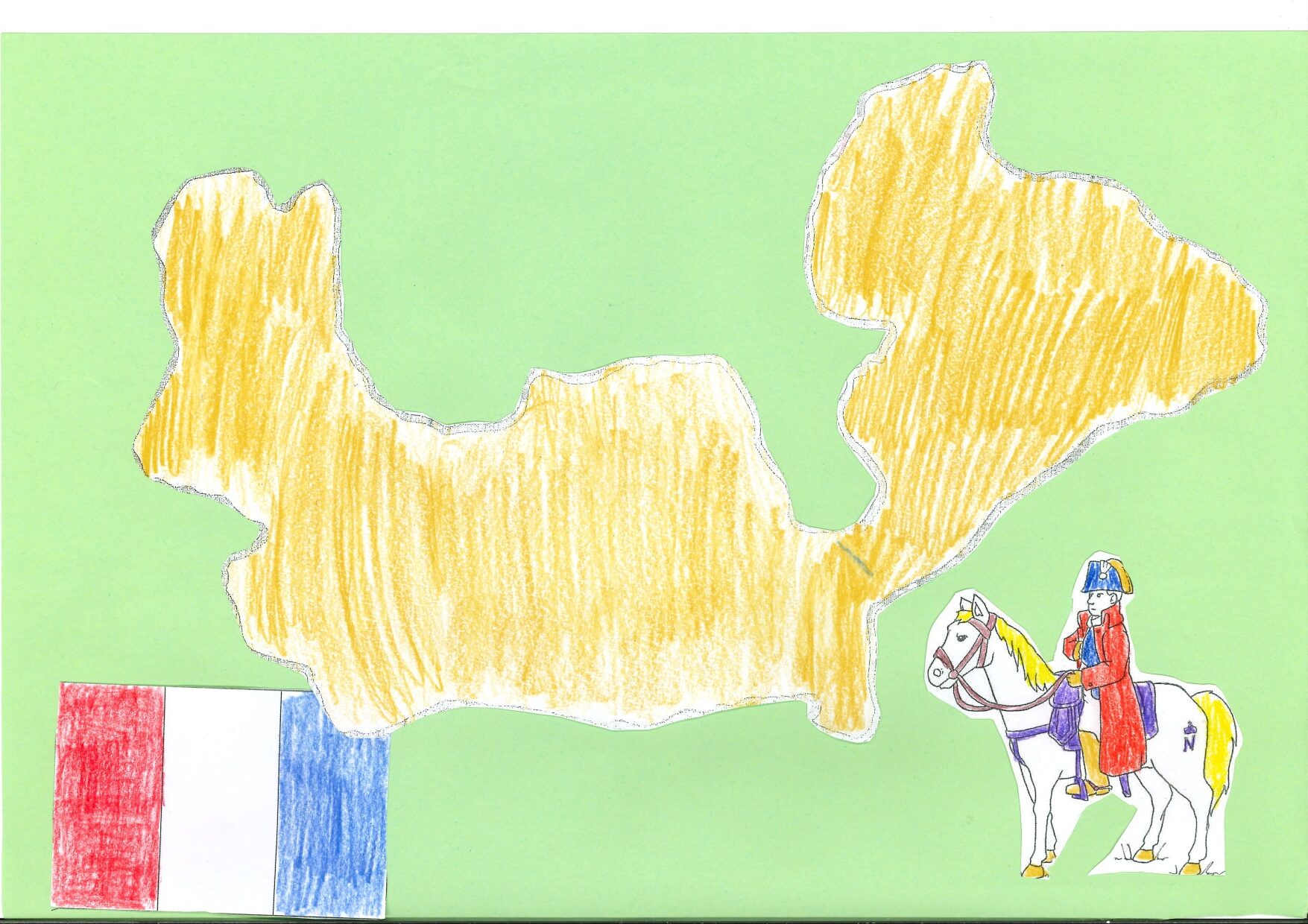
Napoleon Bonaparte drove out the Grisons and included Valtellina among the French territories: all property, including the Palazzetto Besta, was expropriated from the Swiss. Under the French, there was a serious economic crisis, due to the many taxes imposed on the citizens, and little care for the territory, which caused landslides and avalanches.
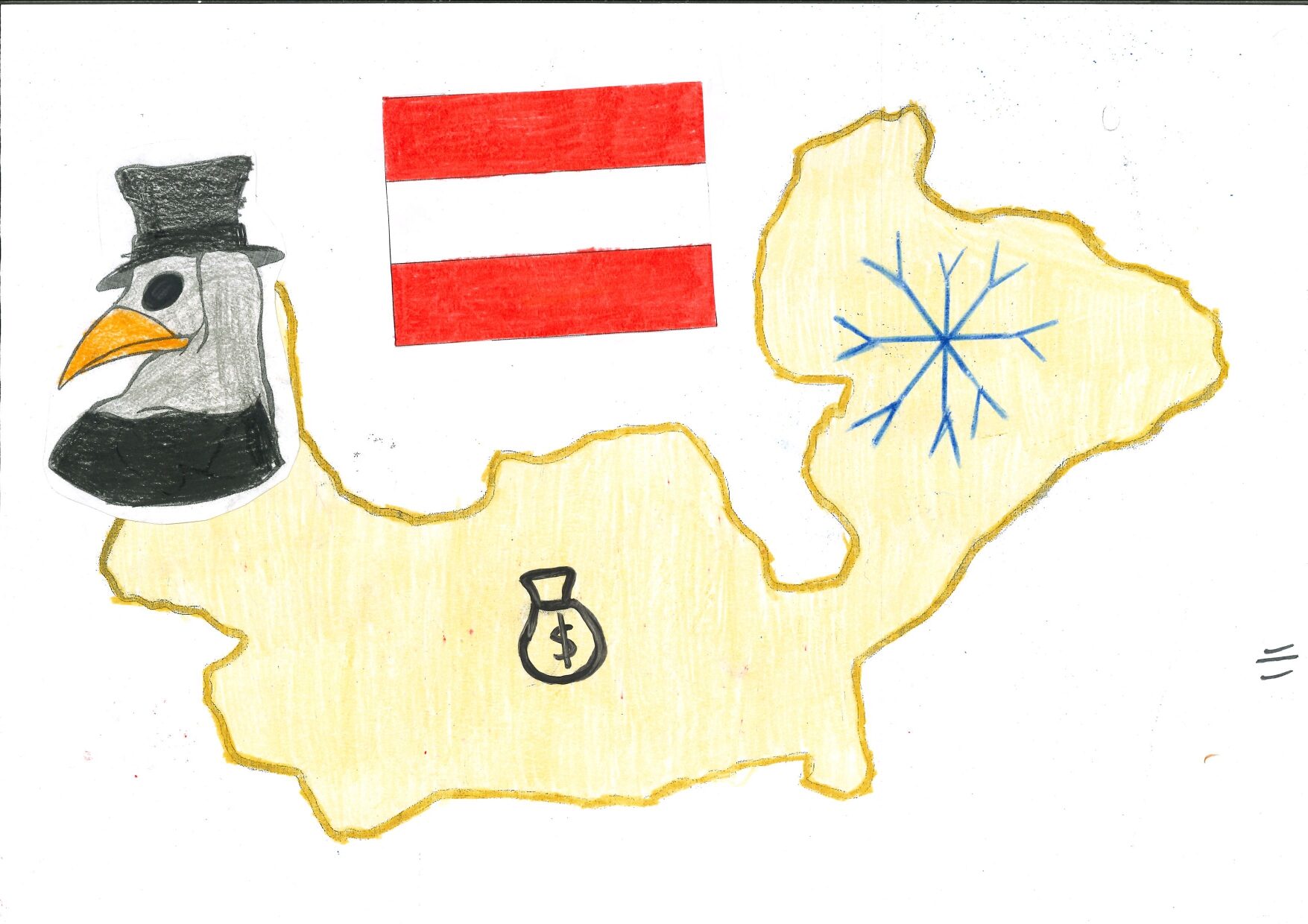
With the arrival of the Austrians, the situation improved economically, but not in terms of epidemics and the excessively cold climate.
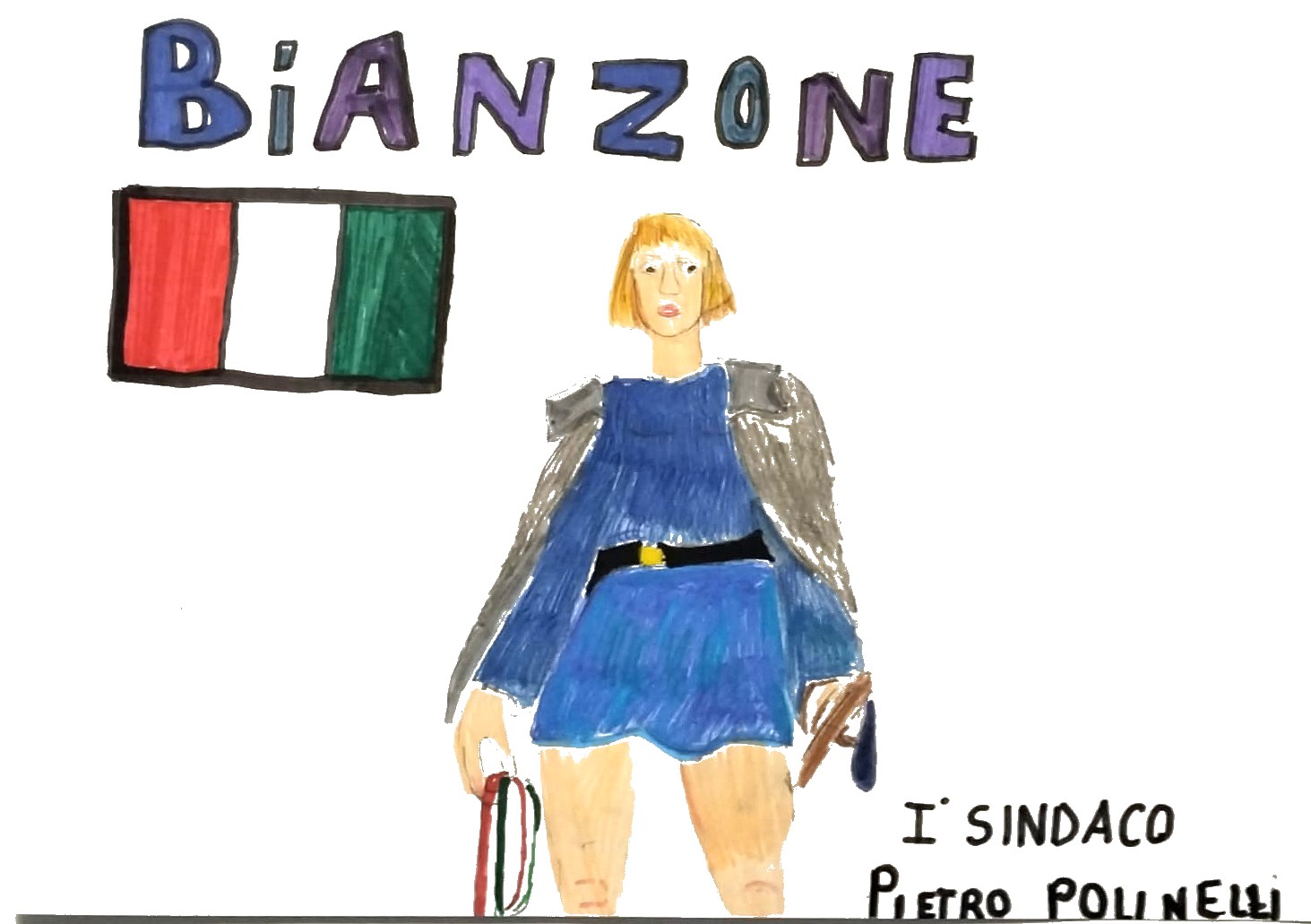
Bianzone became a municipality of the new Italian state, with Pietro Polinelli as its first Italian mayor.
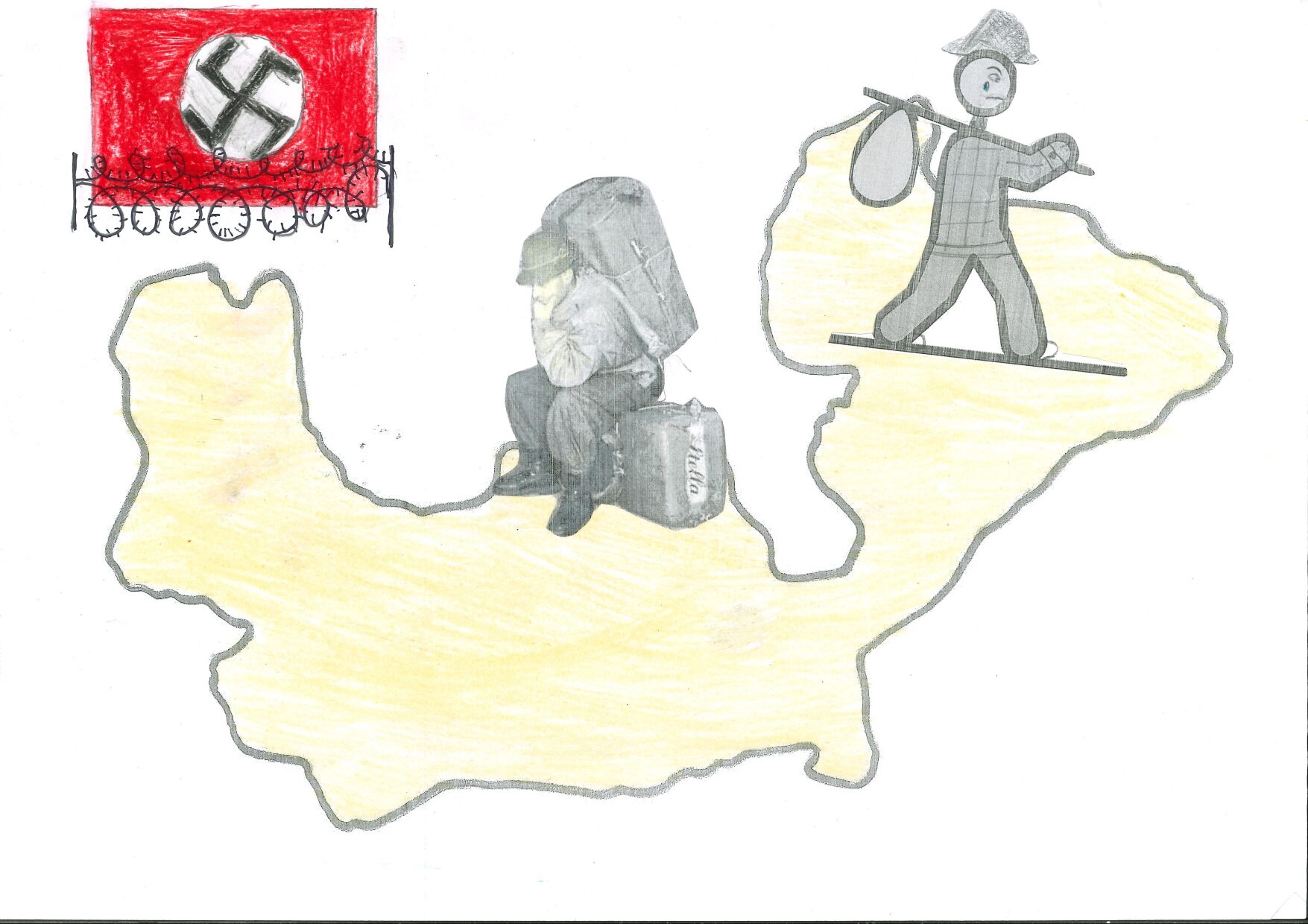
The two world wars claimed several victims in the village. Between 1950 and 1970, the mountain hamlets, Bratta and Piazzeda, depopulated and many people left the village to emigrate to Switzerland, the city and faraway America and Australia. Those who remained turned to smuggling in order to earn a little extra money.
For more information:
- BEFORE THE YEAR ONE THOUSAND
- ONE THOUSAND TO ONE THOUSAND FIVE HUNDRED
- FROM THE 1500S TO THE PRESENT DAY
by Vanda Cerveri
Flora
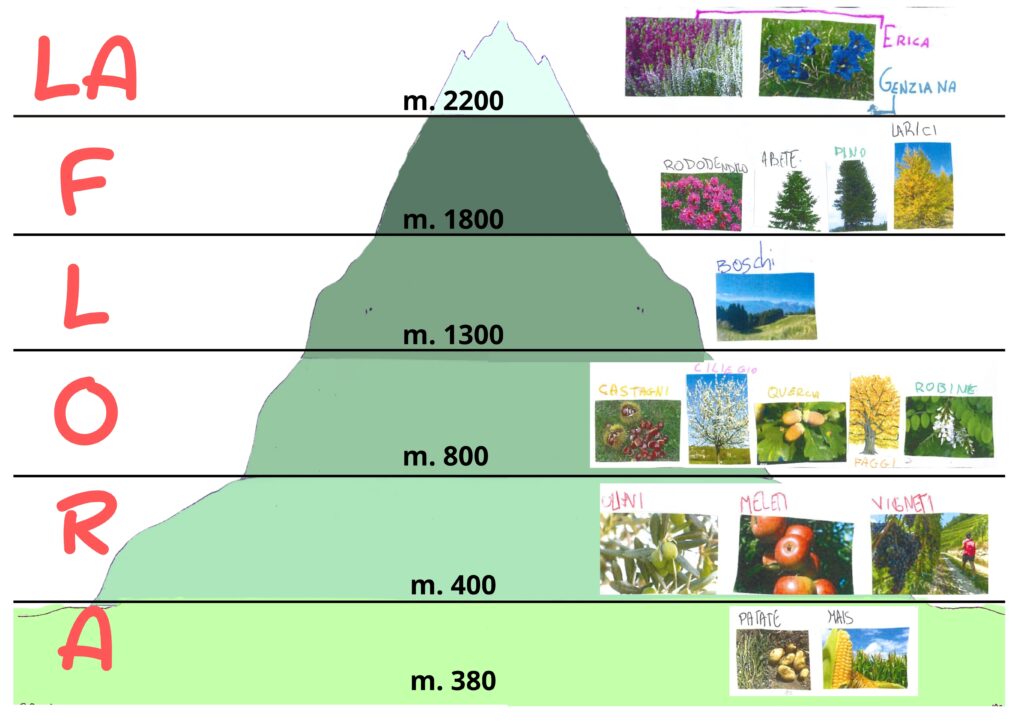
The Bianzone territory is divided into 6 belts characterised by different types of flora:
- deep valley (380-400 m altitude), is fairly flat and characterised by maize fields, potatoes and meadows;
- conoid (400-800 m), it is a promontory created from the debris of the Valle stream characterised by apple orchards and terraced vineyards. Recently, small fruit and olive groves have also been added;
- Slope 800-1300 m, is a slope characterised by broadleaf forests such as locust, beech, chestnut, cherry and oak trees;
- range 1300-1800 m, is a slope characterised by clearings, used in the past as alpine pastures, surrounded by mixed deciduous and coniferous forests;
- range 1800-2200 m, it is a slope characterised by needle forests such as firs, pines and larches at the bottom and bushes such as rhododendron at the top;
- At over 2200 m, it is a mountain slope almost devoid of vegetation where alpine flowers such as gentian and heather can be seen.
Fauna
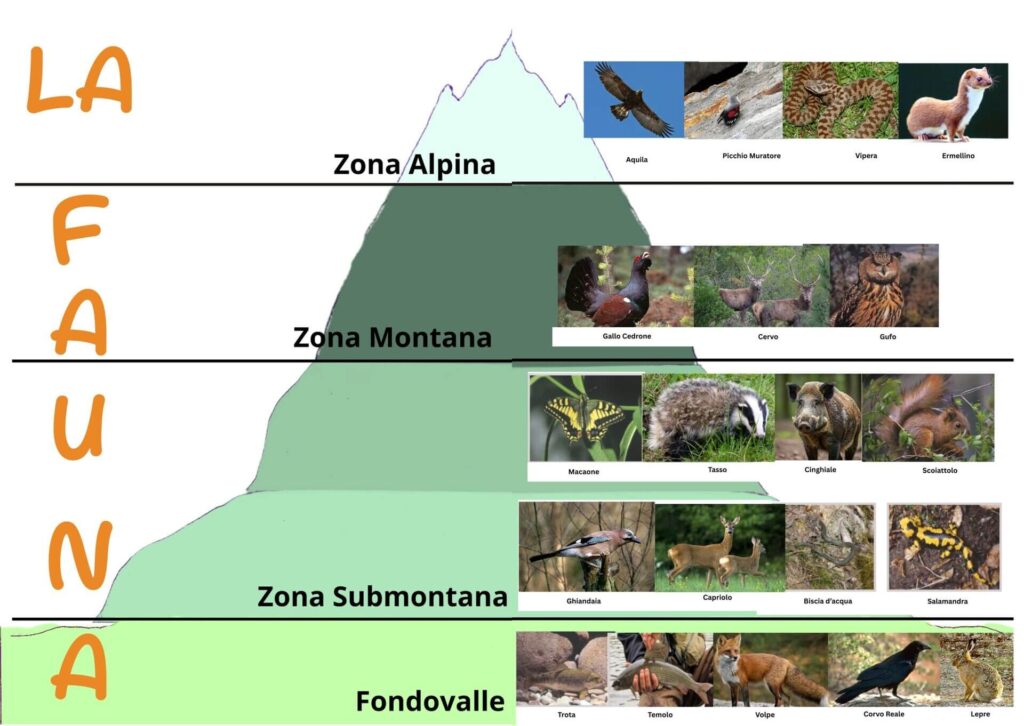
The Bianzone territory is divided into four belts characterised by different types of fauna:
- in the valley bottom one can find amphibians (spotted salamander and frog), fish in the Adda River such as trout and grayling, all the most common birds (such as sparrow, blackbird and swallow), insects (bees and butterflies) and among mammals the fox, bat, hare, stone marten and hedgehog;
- In the sub-mountainous zone one can find roe deer, badgers, wild boar, squirrels, salamanders, lizards, grass snakes, turtle doves, jays, titmice and woodpeckers. Often looking up, buzzards and hawks can be seen. A few years ago, a bear called M19 also visited the area.
- in the mountain area grouse, deer and owl can be found.
- In the alpine area above 2000 m, bearded vultures, eagles, ermines and white hares, which change colour in the winter months, chamois, viper and among insects, butterflies of various colours can be found.
For more information: FLORA AND FAUNA
Religion
The primitive peoples who frequented Bianzone in prehistoric times were polytheists, as did the Romans who conquered the Valtellina under Emperor Augustus. In the 5th century, the Christianity, thanks to the Lombards. The oldest church in the village was the Church of San Siro, commissioned in the 1100s by two sisters from Bormio, Nalucia and Pagana: it has a Latin cross plan and houses the Besta chapel, recognisable by its coat of arms, and the painting of St Clare without a face (perhaps scratched away to prevent the saint from witnessing the disinfestation of the church with lime after the plague epidemic, when the building was used to house the sick).
Today, the Catholic Christian religion is the most widespread in the village, but other cults, predominantly monotheistic, are present following the arrival of foreign families: among them is the Orthodox Christian religion. A group of families meet on Saturday afternoons to pray at the Santuario della Madonna del Piano.
Organisation
Bianzone until 1861 was a territory of conquest by various peoples who came to Valtellina, and the laws changed depending on the conqueror of the moment. Some order began to be brought about in the 17th century thanks to the Statute ’Li vecchi ordini di Bianzone‘. In this volume, the main laws were listed in 145 chapters and it was well explained what public offices were held, what roles were given to people and how they were given.
At the head of the community was a Decano, who was elected in the piazza every year in turn from among the three candidates of the historical contrade: Piazza, Canova, Cambrem, Montagna and Selva. Helping him to enforce the rules were various people.
Economy
Since Roman times, grape growing was the predominant activity in Bianzone. With the sale of wine, particularly at the San Michele fair in Tirano on 29 September, the Bianzonaschi could earn money. During the year, farmers and wood craftsmen were in the service of noble families. In addition to grapes, buckwheat, rye, barley and potatoes were mainly cultivated, and sheep were kept for wool, cows for milk, hens for eggs and donkeys as pack animals.
Since the last century, in addition to the cultivation of grapes, apples have been grown on the dry terraces, and for the past few years also various cultivars. Today, most of the population works in the tertiary sector, and many also work in Switzerland.
Culture
For some decades now, people in Bianzone have been speaking and writing almost exclusively in Italian. However, there are still elderly people in the village who maintain what was the most common language in the past: dialect, or rather dialects! Depending on the area in which people lived, a different dialect developed in terms of pronunciation.
This language is the result of the various conquests that Bianzone and the entire Valtellina underwent: there are in fact words of Latin origin, such as panett (handkerchief), others of Lombard origin, such as buter (butter), and others of Ligurian origin, such as sberlusc (flash). Even some traditional customs derived from other peoples, such as ‘call the grass’ ringing the cowbells at the beginning of March (taken from the Latins) and ‘gabinatt’ knocking from house to house in search of a gift on Epiphany (taken from the Lombards).
Bianzone is also home to several artistic and architectural works:
- the Church of San Siro, with numerous frescoes by 16th-century Valtellina painter Cipriano Valorsa;
- The Sanctuary of the Madonna del Piano at the place where the Madonna is said to have appeared in 1675;
- the Church of San Martino with the nearby ossuary (17th century);
- the Church of St Anne in Piazzeda and the Church of St Anthony and St Bernard in Bratta;
- The Palazzetto Besta, an example of a noble residence from the 16th century;
- la Gatta, a wine estate that is said to have been a convent in the 1600s;
- the Colombaia, a tower-shaped building with a square plan north of the Palazzetto Besta, with various frescoes.
For more information:
- THE ANTHROPIC LANDSCAPE by Vanda Cerveri
- DIALECT AND TRADITIONS by Vanda Cerveri
Discoveries and Inventions
The Bianzonaschi, like all Valtellinesi in general, have always been very resilient. Faced with difficulties caused by a war, an epidemic or a climatic problem (which meant bad harvests), they always rolled up their sleeves and worked together to solve the problems.
The most important and significant invention visible in the village are the terraces, built using the dry stone wall technique. Above them, there are still rows of vines, which make our village beautiful. Other important interventions to improve and make life easier for citizens in the past were the construction of the mountain roads to Bratta and Piazzeda, and the securing of the banks of the Valle stream, which also involved moving the main road.
In addition, in several houses it is possible to see various tools used by farmers in the past to work the land and for the home, built by them from natural materials such as wood, hemp and metal: among them, the wine press for pressing grapes by hand, the fiel for beating buckwheat, and the pudin, a knife with a crescent-shaped blade. The typical construction of the village are the old stone houses attached to each other, still visible in some old quarters of the village such as Canova.
Daily life
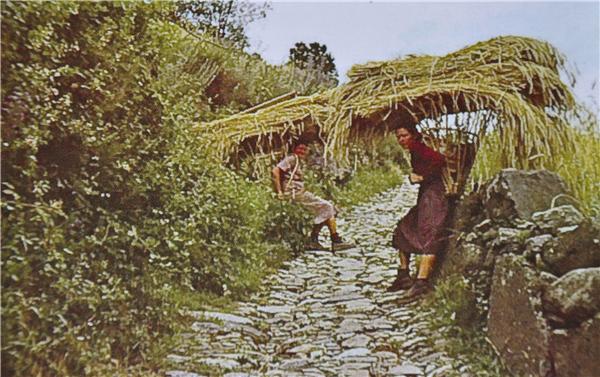
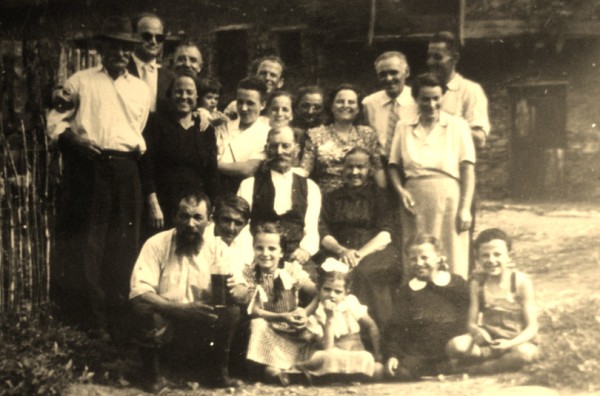
Most of the population in the past were peasants and worked in the service of noble families, such as the Planta or Besta families. The poor families in Bianzone were very numerous because children were the only wealth the peasants possessed (the more the better). Everybody worked: the children looked after the animals and younger siblings and helped with the housework; the women helped in the fields, looked after the children and the elderly, cooked and kept the house clean; the men worked in the fields and especially in winter built or fixed tools and repaired furniture or parts of the house.
The cucine was simple but hearty. Buckwheat was used to make pizzoccheri and polenta, rye for bread baked in communal ovens, and barley for minestrone. People ate mostly cheese, vegetables, cereals and seasonal fruit, little meat because the animals were used for milk, eggs and wool.
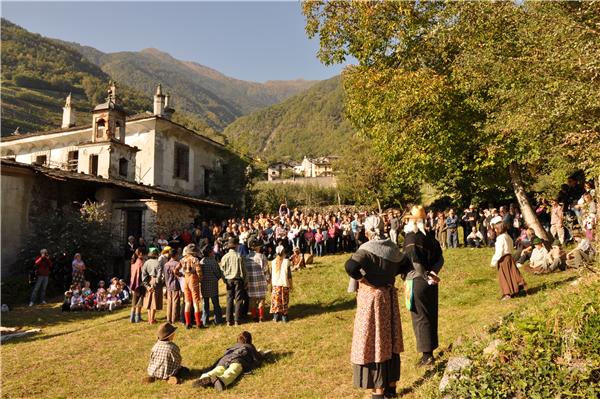
Men wore long trousers fastened with braces and a shirt, to which a woollen jumper was added in winter, they wore boots and long woollen socks and wore a hat to protect them from the sun. Women, on the other hand, wore a knee-length skirt or dress, an apron and a blouse or woollen jumper when it was cold, on their feet a pair of boots and long stockings like the men, and wore a headscarf to protect themselves from the sun or even to go to mass.
Sports activities
Various sports activities can be practised in the village:
- In the Omar and Pietro Sports Centre (named in memory of two boys from Bianzone who died very young and who were very passionate about sport), football is played and in summer beach volleyball is played;
- inside the bar you can try your hand at bocce;
- In the gymnasium near the school they practise karate, climbing and also volleyball;
- Since Bianzone is made up of climbs and descents, another popular activity is cycling;
- since there are so many cycling and walking routes, in addition to the bike, there are also many walks or runs;
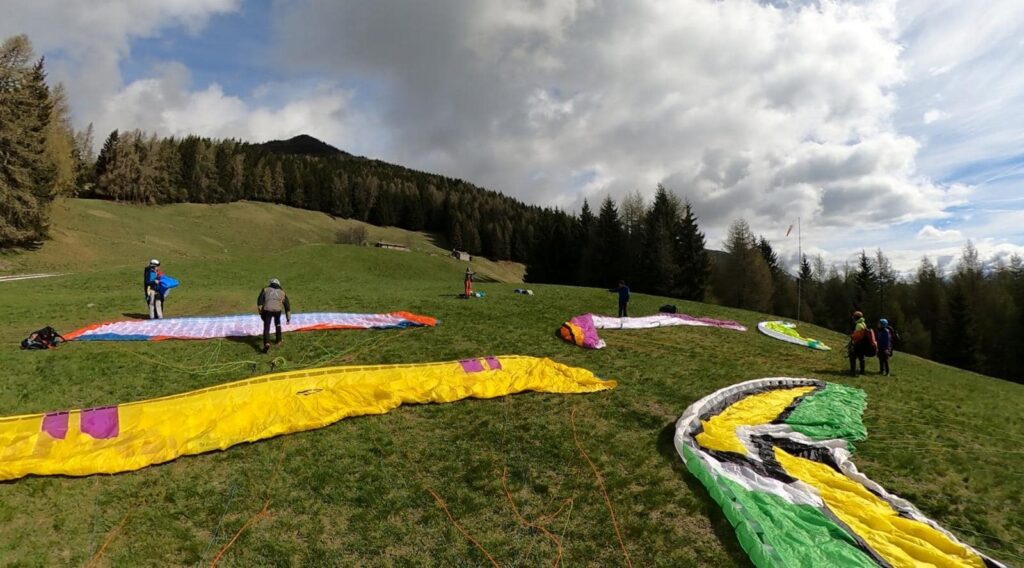
- high in the mountains at Nemina Bassa, many take to the skies on a paraglider.