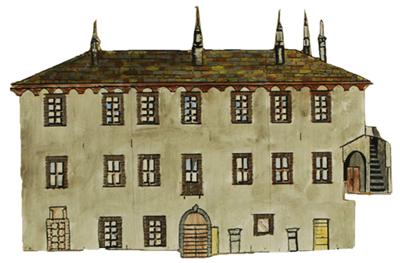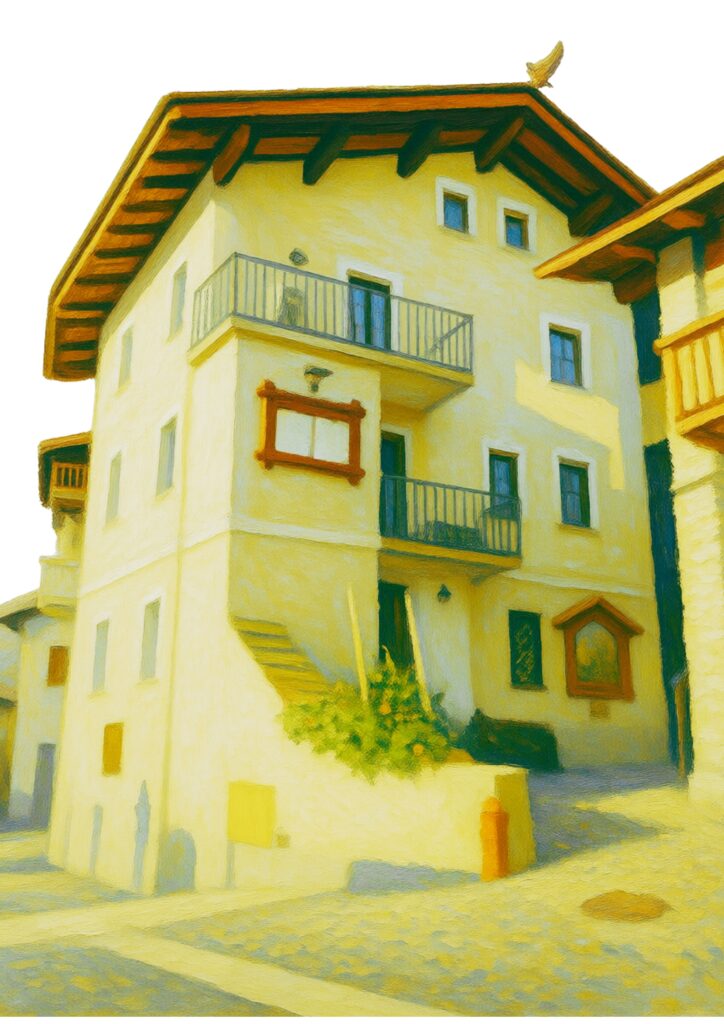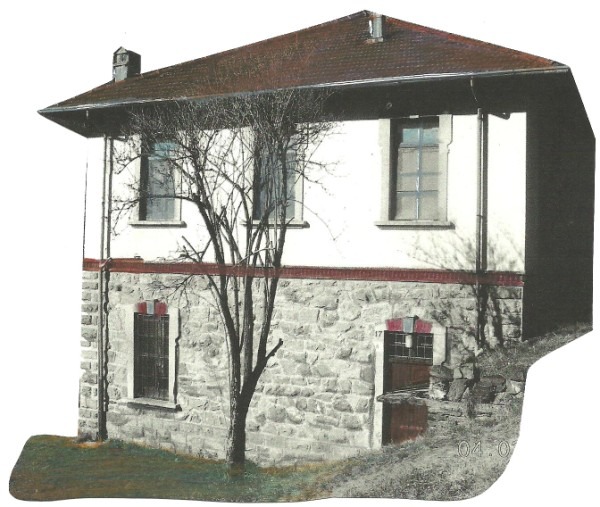

The Palazzetto Besta in Bianzone is an Alpine Renaissance manor house, now in a state of quiet decay, which retains considerable artistic value. Surrounded by two hectares of land, it retains its original features, including slender chimneys, lunettes on the eaves cornice and symmetrical openings surrounded by green stone. A dovecote at the edge of the property, with frescoes and decorations, testifies to its former splendour.
Architecture and structure
Passing through the gate on Via Algherone, you enter a courtyard that reveals the characteristic U-shaped plan“ of the palace, of medieval origin. The transverse body in front of the entrance features a frescoed niche on the ground floor, now degraded, and a hexagonal marble well of the 18th century. On the first floor, an interesting loggia with five arches on pillars of green Tresivio stone and cross vaults is surmounted by a turret with a clock and baroque dome overlooking the courtyard.
To the left stands the main body of the building, rectangular in shape (approximately 32×20 metres), with the entrance on the largest side facing south. This part, with plastered stone walls, has three floors, plus cellars.
Interior and historical details
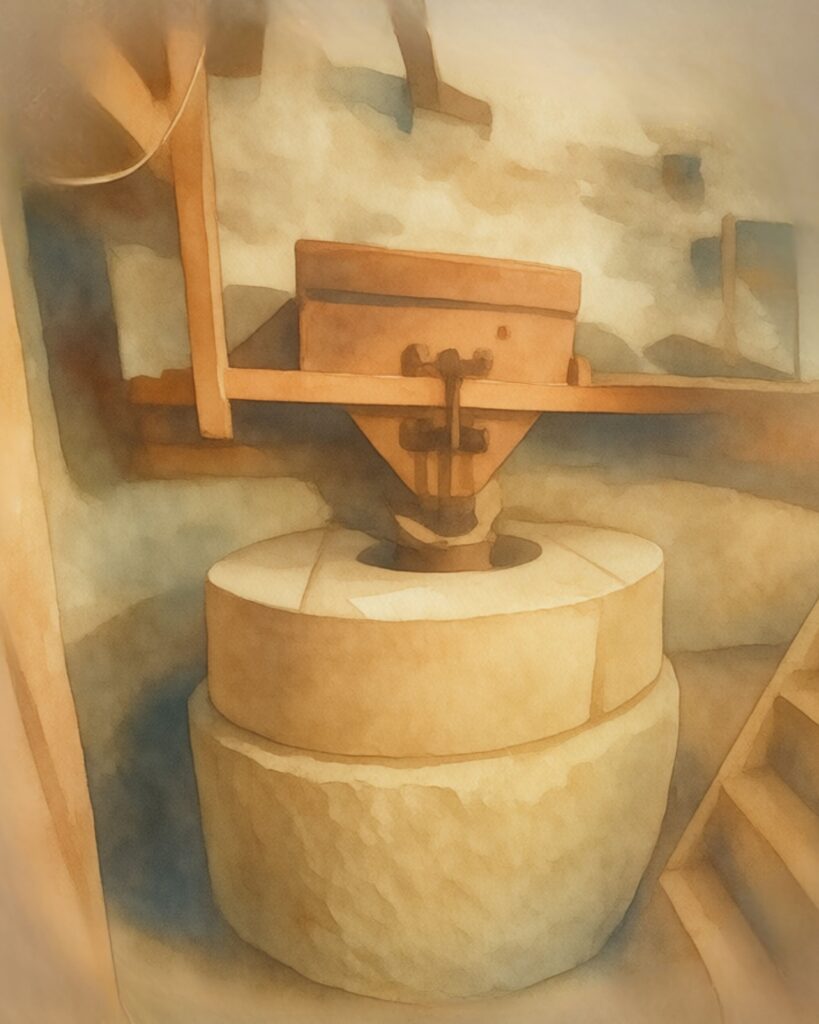
Entering through the main door, a steep staircase with a graceful grotesque frescoed vault leads to the upper floors. On the ground floor a cooking with a distinctive umbrella vault and a large fireplace, flanked by a small wood-lined room. The rooms created by closing off the arcade once housed the old wine press and other agricultural tools.
On the first floor is the main hall, measuring approximately 4×8 metres, illuminated by three large windows to the south. Its “bat wing” vaulting recalls the dining room of the Besta palace in Teglio and depicts episodes from the Jerusalem Delivered by Torquato Tasso. The second floor, which is severely damaged, has rooms with valuable coffered ceilings, while the cellar floor has vaults.
The roof, recently restored, is pitched and hipped, with a wooden structure and slate roof, and features the characteristic shaped turret chimneys typical of the period and of valley architecture. The building for agricultural use, added in the 19th century on the south side, is less prominent.
From 2004 the Palazzetto Besta and its 15,000 square metres of land are owned by the municipality of Bianzone.