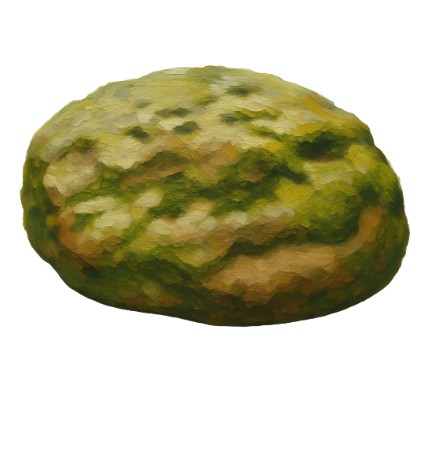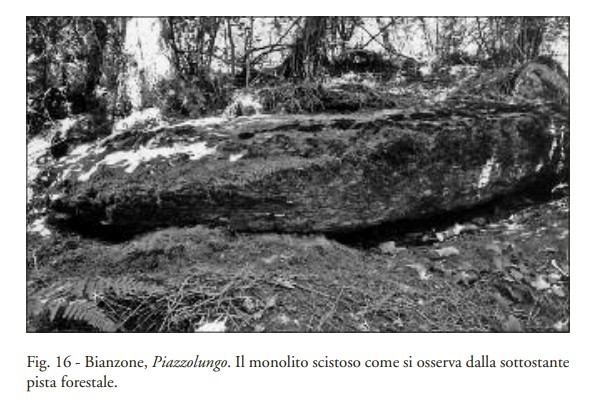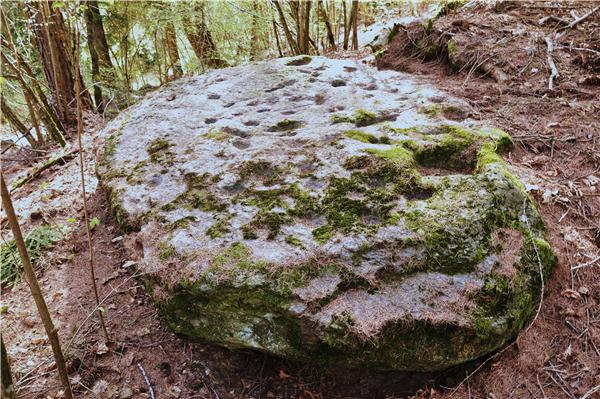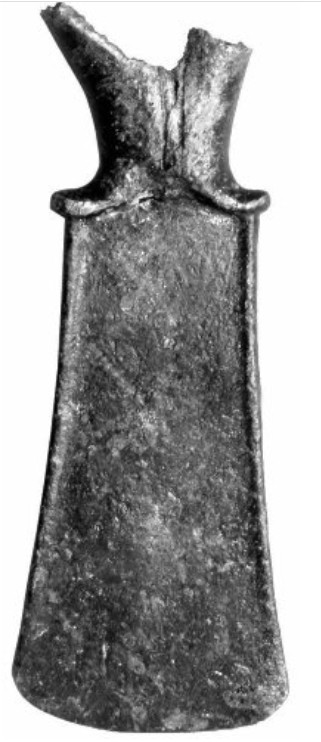

Very little is known about the origins of the municipality of Bianzone: certainly the locality has been inhabited since prehistoric times, as can be deduced from the discovery of a’Iron Age axe and some engraved stones found on municipal territory, the largest of which is the Rock of Piazzolungo.
“The presence of a “curious” stone above the mountain of Piazzeda, in Bianzone, was already known to some of the few inhabitants of the hamlet, but no one, as far as we know, had ever dwelt on the meaning of the strange engravings on the surface. [...]
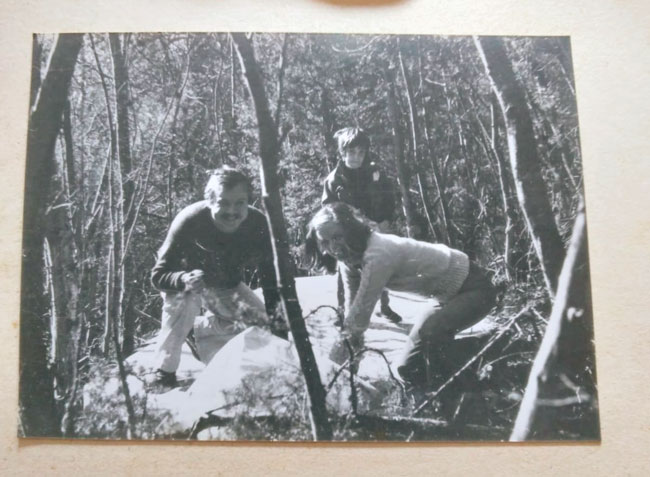
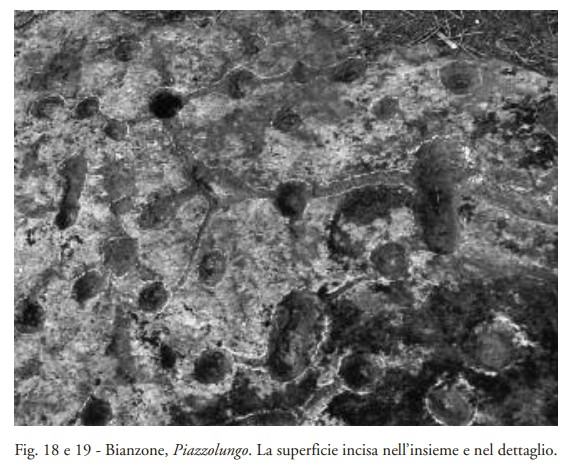
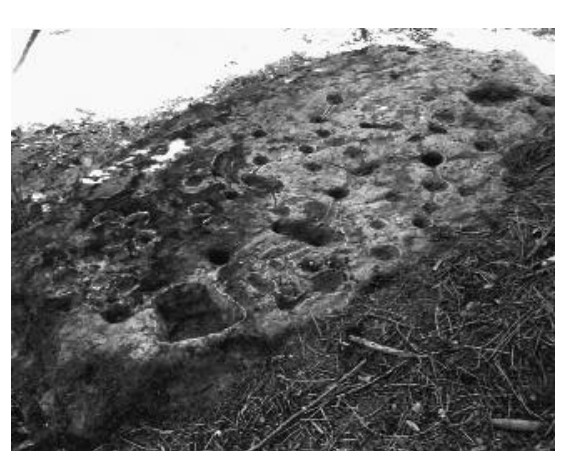
The rock in question is located at an altitude of about 1140 m above sea level. along the Piazzolungo path which leads from Piazzeda to Nemina Bassa. The boulder is located in a wooded area, recently affected by a Vaia-like storm, at the edge of the path covered by an abundant layer of foliage and organic material; once properly cleaned, it shows a sensational series of variously assorted incisions and diversified shapes; almost all of them are connected by shallow gullies, in some cases barely detectable.
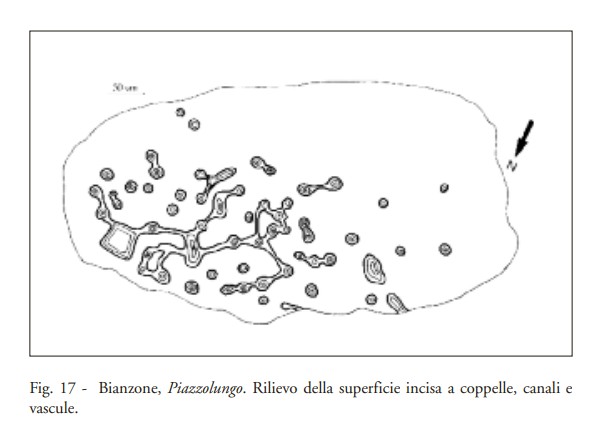
The engravings, geometrically discrete, are to be considered the work of human beings, as in nature they cannot be classified as products of sedimentological origin or in any case linked to the erosive origin of natural events. The rock, certainly erratic, made of metamorphic rock material, has an area of about 8 square metres, a thickness of about one metre and presents the surface facing south-east with an inclination of about 6-7°. The most widespread incisions are the cup-marks, 43 of which have been counted, variously distributed, varying in diameter from 4 to 7 cm, all generally having a hemispherical shape and connected to each other through cabalettes, as if to signify the facilitation of fluid circulation.
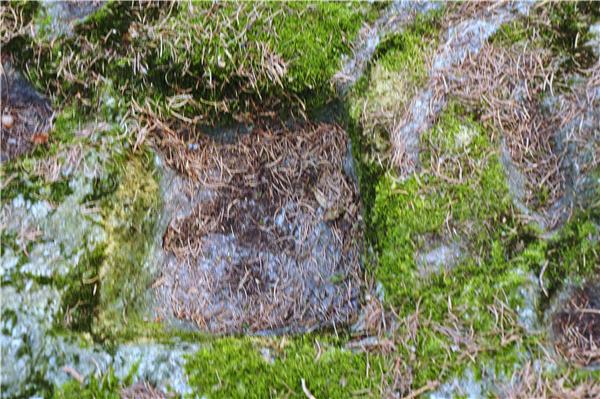
Other interesting, albeit enigmatic, forms, strongly engraved, are two capacious tubs with a square base measuring 20 by 20 cm and about 10 deep, capable of holding even more than two litres of liquid, also connected by cabals to some cup-marks.
As many as four vaguely piediform pans were noticed, with a basal size of 4 by 20 cm and a depth of about 3 cm; their arrangement is variously random and without any comprehensible meaning for us.
[...] There are no explanations and/or logical interpretations of the meaning of the engravings at the moment, we are in the pure and simple phase of conjecture and hypothesis. Certainly, these signs left by who knows which of our ancestors date back to periods prior to the age of metals, thus throwing out bland and unreliable dates, let us say over 10,000 BC. On the destination of such a stone, perhaps, looking at the arrangement of the basins and cup-marks and the connecting cabals, one could venture a hypothesis: a sacrificial altar or, in any case, a place of worship, a very common habit in ancestral populations. One observation that can be made is the following: apart from a smaller and perhaps more recent testimony, no other evidence or engravings of such importance and scope are known in the area under examination.
To be fair, it should be noted that several years ago, an archaeological find was unearthed in the vicinity of the hamlet of Bratta, consisting of a bronze axe (dating back to around 2000 B.C.), which is now kept at the Milan Archaeological Heritage Office. Undoubtedly, and this is the hope we make, the rocky find will be reported and thus be the subject of study by experts and experts in the field, so that we will be able to learn more about the history of the people or peoples who lived in our territory in such distant times.
text by Mario Curcio - Coordinator of the Ecomuseo of the Rhaetian Terraces of Bianzone taken from the archive of articles on the previous site
photos by Vanda Cerveri
For further information:
- article by the Valtellinese Archaeological Institute - Newsletter 2005
- Intorno Tirano article of 4 August 2021 on the discovery of the boulder
Update August 2021:
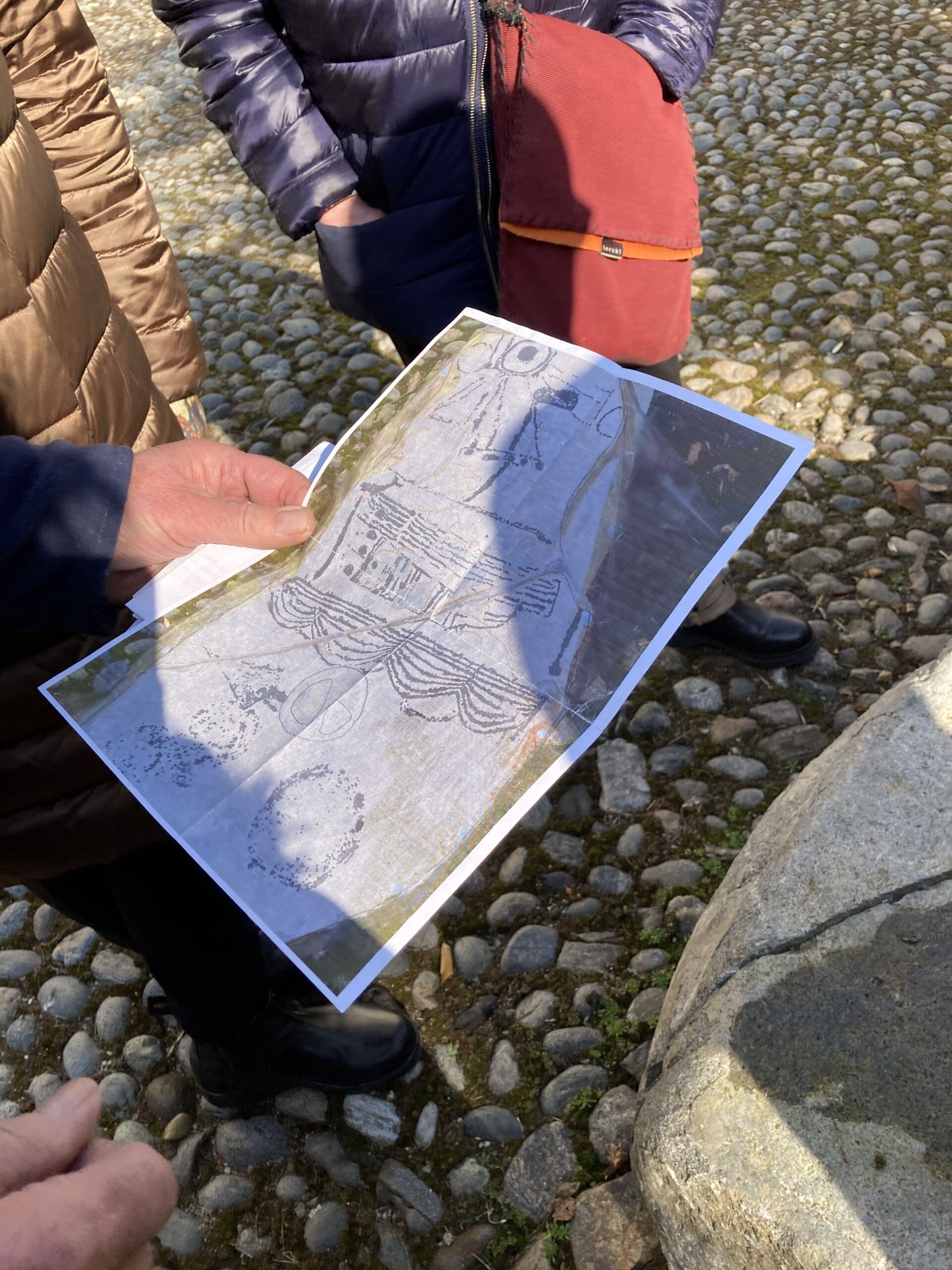
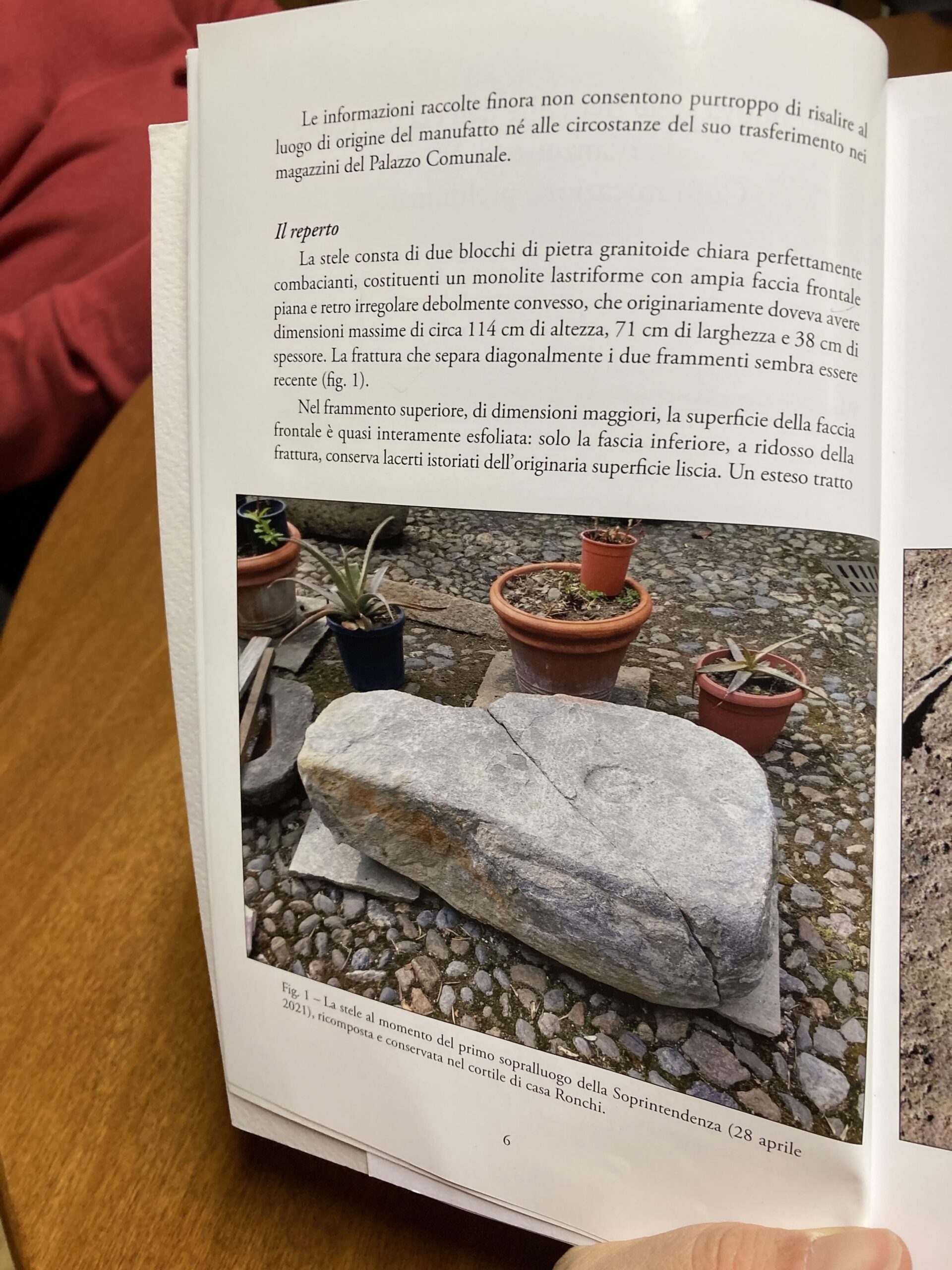
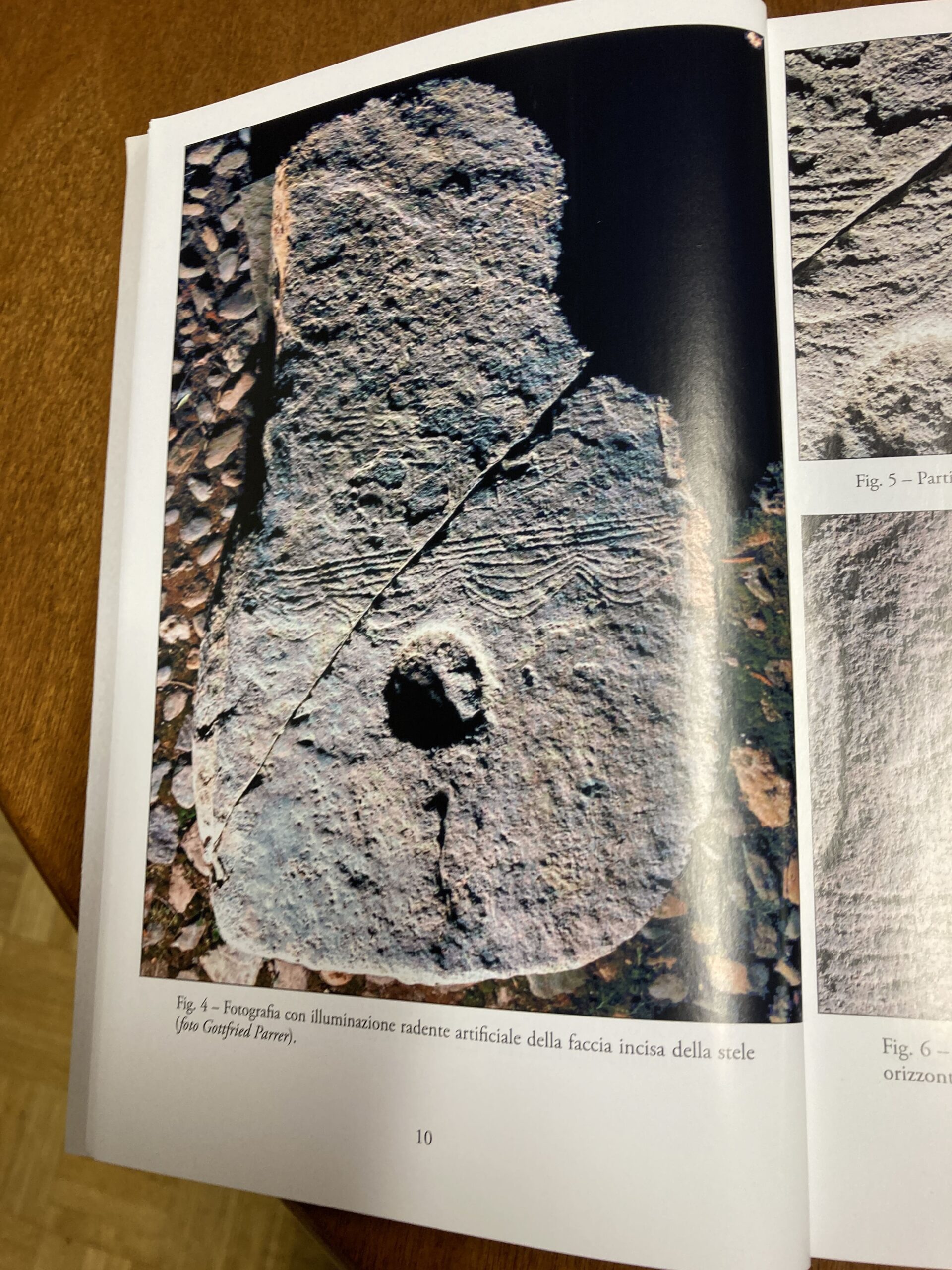
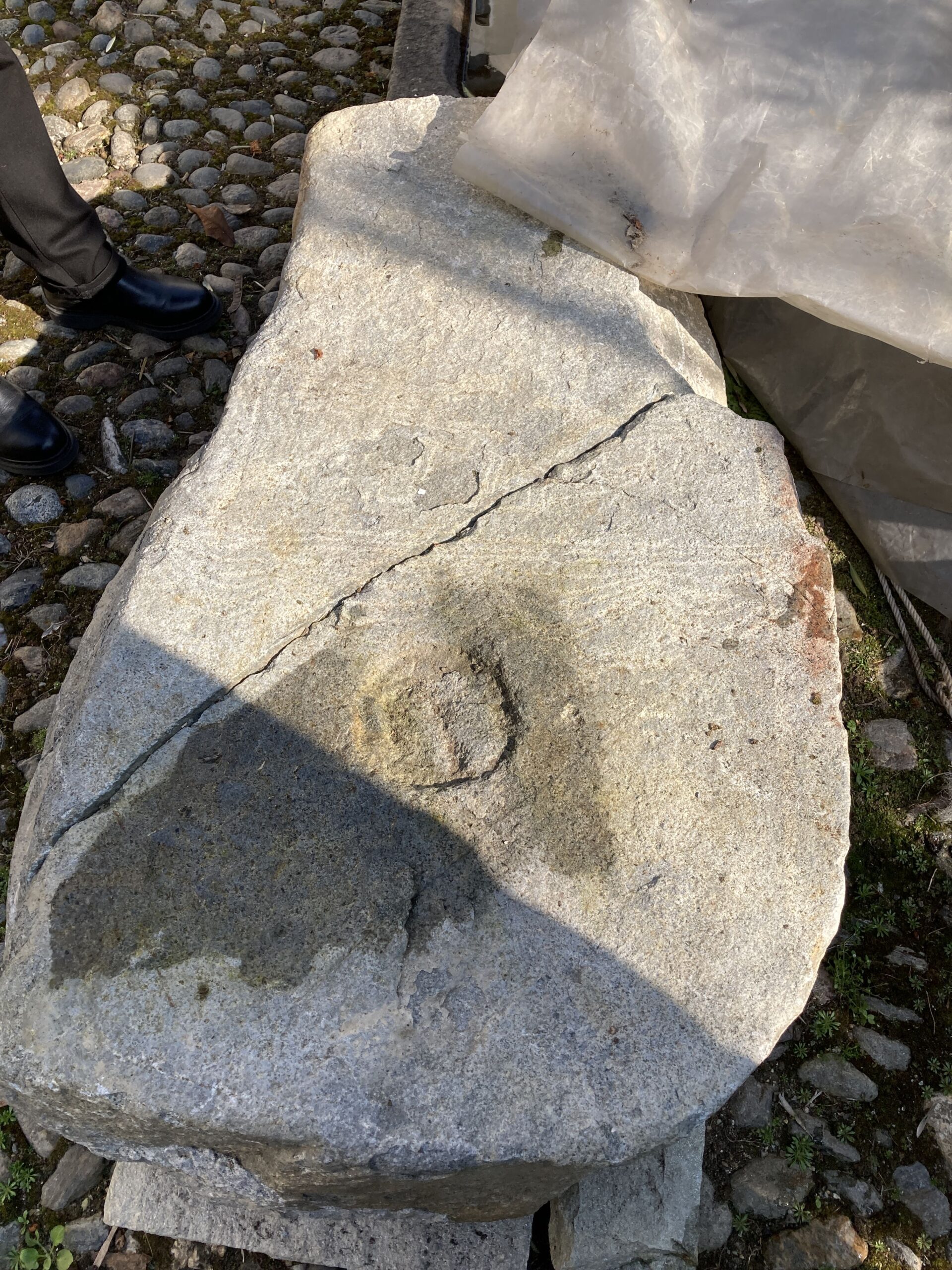
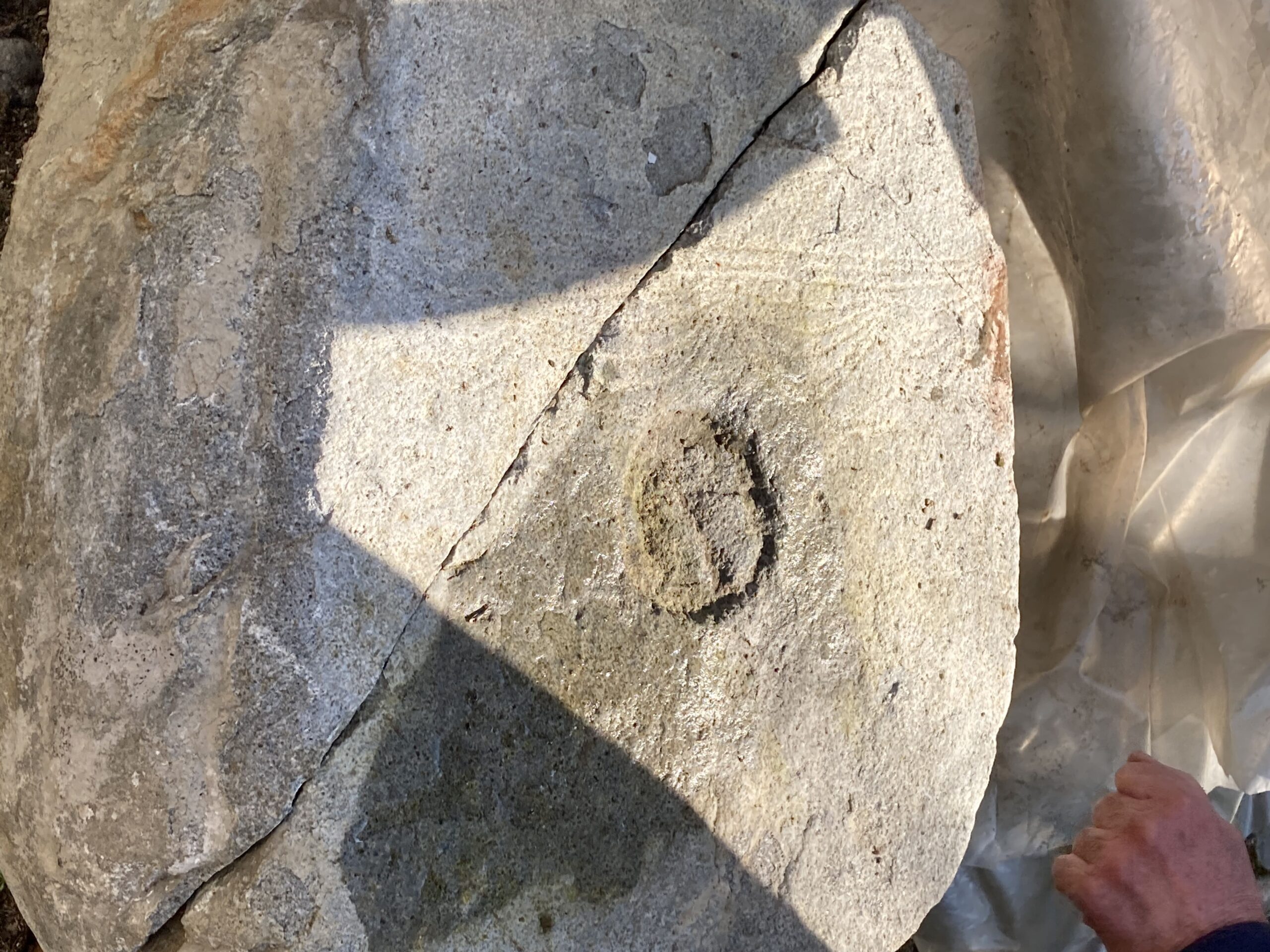
It was found a new Copper Age stele statue in the grounds of the municipal building in Bianzone. Although the Bianzone stele bears the signs of later reuse, it still retains traces of the prehistoric decoration, engraved on hammerstone 5000 years ago. It is currently preserved in the gardens of Ronchi House waiting to be moved to the Antiquarium Tellinum.